
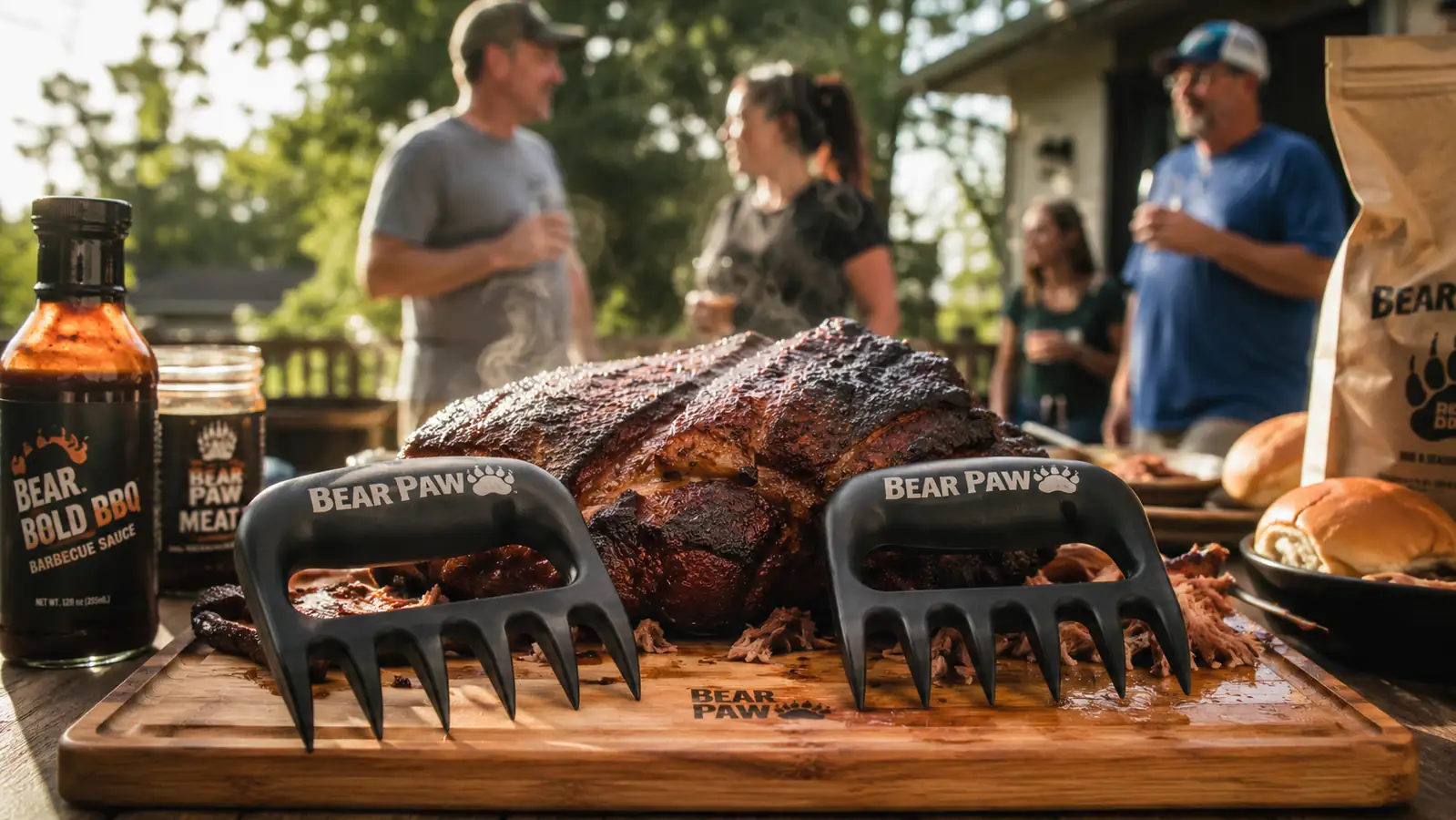
I bought my first pair of Bear Paw meat claws back in May, the week before my nephew's graduation party, because I was flat tired of standing over a cutting board with two dinner forks, sweating through my shirt, watching shredded pork fly off the edge of the counter every time I leaned into it. Thirty pounds of pork butt for forty people does not shred itself gracefully with forks. I've since run these claws through an entire cookout season, every reunion, every church potluck, every Saturday I fired up the smoker just because it was Saturday, and I've got some real opinions about them now.
Bear Paws makes the pair I bought, the black plastic handles with the curved metal tines molded into a paw shape. It is not a fancy tool. It's not going to change your life. But after shredding pork butts, whole smoked chickens, and one genuinely stubborn beef chuck roast over the course of a summer, I can tell you exactly where these earn a permanent spot in my kitchen drawer and where I still reach for a plain old fork instead.
The Quick Verdict
A season in, these still beat two forks by a wide margin on pork and chicken, though the plastic handles pick up some cosmetic wear by midsummer and they're not built for anything tougher than a well-rested shoulder.
Amazon Check Today's Price →Tired of losing pulled pork over the side of the cutting board?
That's the exact problem these claws solved for me. If you're hosting a crowd this weekend, check today's price on Amazon before you commit to another batch with just a fork.
Amazon Check Today's Price on Amazon →How I've Used Mine All Season
I keep the claws in the same drawer as my tongs and my instant-read thermometer, which tells you how often they come out. Starting in May, I used them on every pork butt I smoked, and this summer that was fourteen of them, most between 8 and 9 pounds, cooked low on my offset until the internal hit around 203 degrees and the bone wiggled loose. That's the sweet spot where shredding actually matters. Pull a butt off too early and you're fighting connective tissue no claw is going to win against, and no amount of leverage from a good pair of claws fixes a cook that stopped short.
My wife Brenda started using them too, mostly on the whole smoked chickens we do for Sunday dinner, and she liked them enough that she stopped asking to borrow my fork trick. My oldest grandson, who's twelve and thinks he's a pitmaster now, has used them under supervision on cooler cuts. The claws are hot-safe up to a point since the tines are metal and the meat itself is what's hot, but I still make him wait until a piece has cooled enough to handle before he digs in solo. Better a slightly cooler pork butt than a burned hand at a family cookout.
The one experiment that didn't quite work was jackfruit. My daughter went through a vegetarian pulled-jackfruit phase in June and asked if the claws would shred it like they do pork. They did fine on the fibrous parts but the claws kept sliding off the smoother core pieces since jackfruit doesn't have the same grain structure as cooked meat. Good to know if you're buying these expecting a do-everything tool rather than a meat-specific one.
The Grip Does Real Work Two Forks Can't
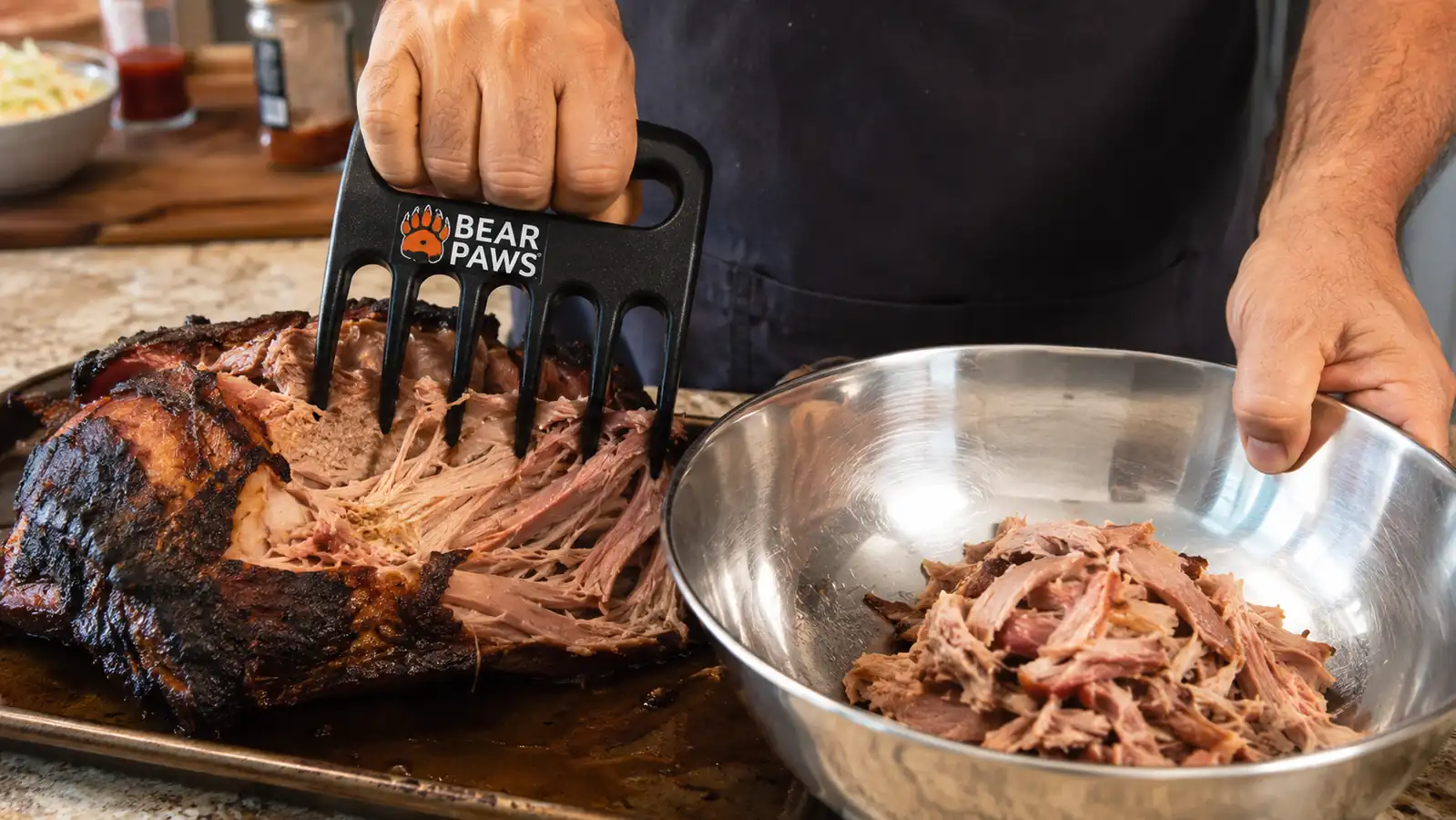
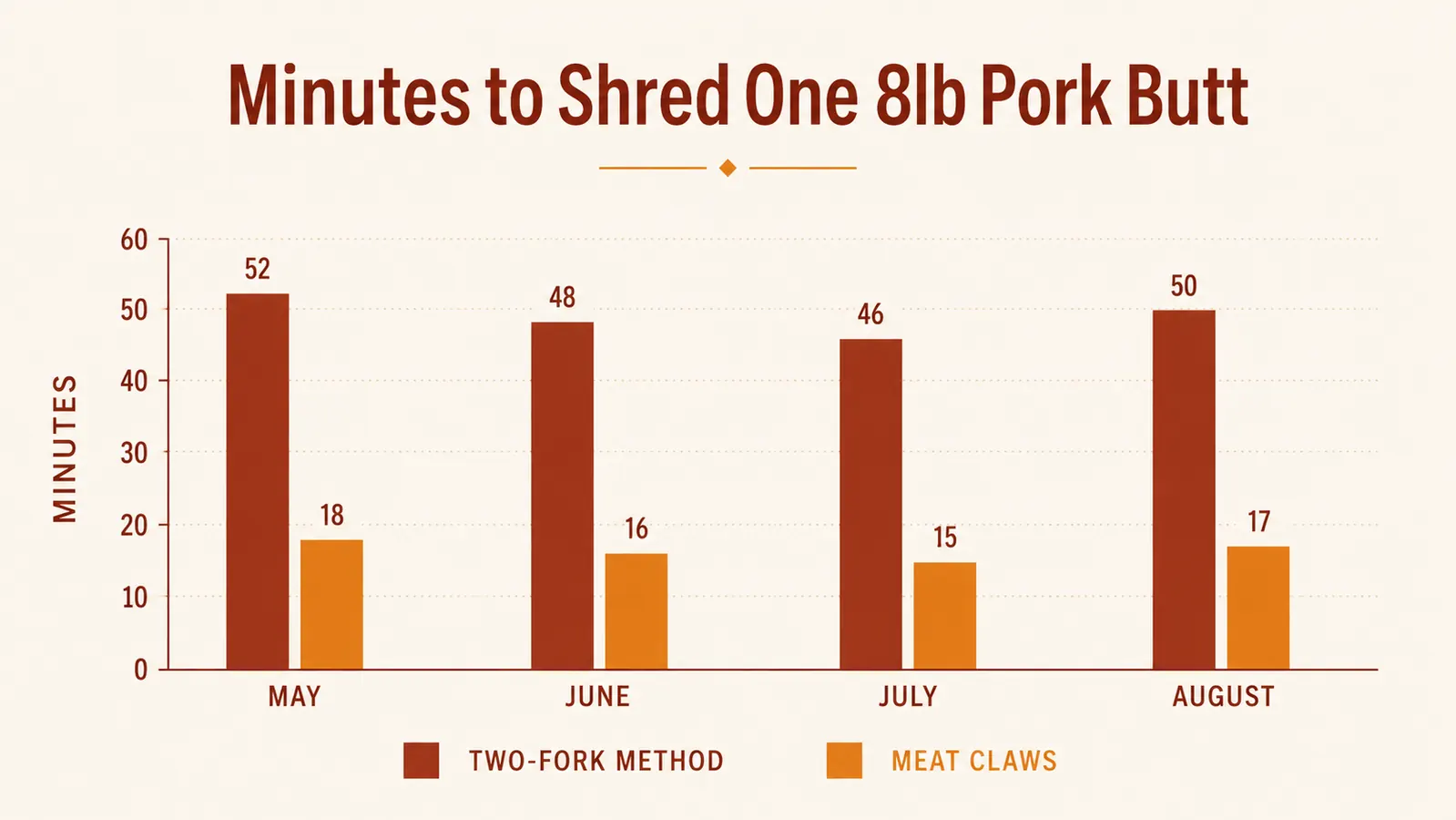
The honest reason these beat forks for me isn't speed, though they are faster. It's leverage. With forks, you're pinching meat between two tines and dragging, which works but tires your forearms out fast on a big cut. The claws let you dig four tines deep into the meat and use your whole hand and wrist to pull, so you're using bigger muscles instead of just your fingers. On an 8-pound butt, that's the difference between a five-minute job and a fifteen-minute one, and my hands aren't sore the next morning the way they used to be after a big cook.
The curved shape also matters more than I expected. Straight tines just poke through meat. The curve on these lets you scoop and pull in one motion, almost like you're raking, which keeps the shreds a more consistent size instead of the mix of long strings and mushy bits you get hand-pulling with forks when you're tired and rushing because forty people are standing around your smoker waiting to eat. Consistent shred size matters more than you'd think when you're building sandwiches, since ragged, uneven pieces fall off the bun and even-sized shreds hold together on the bread.
How They Held Up Over a Full Season
This is where I have to be honest instead of just enthusiastic. The metal tines themselves have held up fine, no rust, no bending from normal use, even though they've gone through far more dishwasher cycles than the manufacturer probably had in mind on the care label. But the plastic handles are a different story. By July, the black plastic on my right-hand claw had picked up a permanent orange-brown tint from grease and barbecue sauce that no amount of scrubbing has fully lifted. It's cosmetic, not functional, but if you're the type who likes your kitchen tools looking new, you'll notice it.
I also had one tine on the left claw develop a slight bend after I used it to try to lift a whole cooked chicken out of a deep pan, which is not really what these are built for. Lifting heavy, unshredded cuts puts sideways pressure on tines designed for pulling apart already-tender meat. Once I stopped using them as a lifting tool and stuck to actual shredding, I haven't had another issue since, and the bent tine still works fine for shredding even with its slight kink.
What I Wish I'd Known Before I Bought Mine
I didn't realize until my third or fourth cook that meat temperature matters almost as much as the tool itself. Straight off a smoker resting at 165 degrees, a pork butt fights back and the claws work harder than they need to. Give it a full 30 to 45 minute rest wrapped in foil or butcher paper first, and the meat relaxes enough that the claws practically glide through it. I learned that the hard way at my sister-in-law's birthday cookout, rushing a butt off the smoker and straight onto the cutting board because guests were already lining up.
I also wish I'd known that a single pair works fine for one person shredding, but it slows down badly if you're trying to have two people work a big cut at once with only one set of claws between them. My brother-in-law and I ended up passing a single pair back and forth at a reunion cook, and it would have gone twice as fast if we'd each had our own. Something to think about if you're regularly cooking for large groups with help in the kitchen.
One more thing nobody mentioned to me at the store: the size runs a bit generous. My hands are average for a grown man and they fit fine, but Brenda's hands are smaller and she has to grip a little tighter than she'd like to keep full control. It hasn't stopped her from using them, but if you're buying these for someone with smaller hands, it's worth knowing going in.
Two Pairs or One? What a Full Season of Hosting Taught Me
By July I'd bought a second pair, mostly so Brenda and I could both work a big cut at the same time without waiting on each other. That second pair paid for itself the very first reunion we used it at, cutting our shredding time on a 9-pound butt down to under five minutes with two of us going at once instead of one person doing all the work while everyone else stood around.
If you only cook for your own household, one pair is plenty and you'll rarely feel like you're waiting on the tool. But if you're the designated cook for reunions, potlucks, or any gathering where you're feeding thirty or more people regularly, I'd budget for two pairs from the start. It's a small extra cost against the time you save when there's an actual crowd standing in your kitchen hungry.

Cleanup Is the Part Nobody Warns You About
The finger loops where your hand slides in are the one design element I'd change if Bear Paws asked me. Grease and small bits of meat collect in those loops, and if you don't rinse them immediately after use, you're digging shredded pork out of the crevices with a toothpick the next morning. I've made it a habit to rinse mine under hot water the second I set them down, before the fat has a chance to cool and harden in there.
They're labeled dishwasher safe, and mine have survived roughly forty cycles at this point without cracking, but I've noticed the top rack treats them better than the bottom rack, where the heating element runs hotter and seems to accelerate that grease staining I mentioned. If you want yours looking newer longer, hand wash and top rack only. If you just want them functional, the dishwasher works fine.
What I Liked
- Shreds an 8-9 pound pork butt in about a third of the time two forks take
- Spares your forearms compared to dragging two forks through a big batch
- Curved tines produce more consistent shred size than hand-pulling
- Metal tines have shown zero rust or dulling after a full season
- Comfortable enough for a spouse or older kid to use without much instruction
Where It Falls Short
- Plastic handles pick up a permanent grease stain by midsummer
- A tine can bend if you use them to lift heavy cuts instead of just shredding
- Finger loops trap grease and need an immediate rinse or they're a pain to clean
- Not much help on fibrous vegetarian substitutes like jackfruit
- Not a lifting or serving tool, despite how they're sometimes photographed as one
The claws don't make the pork any better. They just get it into forty bowls before everybody stops being polite about waiting.
Who This Is For
If you're cooking pork butts, whole chickens, or brisket for a crowd more than a couple times a month, whether that's a standing family reunion gig or you're just the one who always ends up hosting, these have earned a permanent place in my kitchen. The time and sore forearms they save you make up for the cost on the very first cookout you use them for, and anyone in the kitchen can pick a pair up and start shredding without any real instruction.
I'd also point these at anyone who does a lot of meal prep shredding chicken breasts for the week, even outside of cookout season. My niece uses hers year-round for weeknight chicken tacos and swears it's cut her Sunday prep time down by half, which tells me this isn't strictly a summer tool even though that's when mine get their heaviest use.
Who Should Skip It
If you cook for two or three people and shred meat maybe once a season, two forks will serve you just fine and you won't miss having a dedicated tool taking up drawer space. And if you're picturing these as a multi-purpose kitchen gadget for lifting, serving, or carving, that's not what they're built for. Keep a good pair of tongs and a carving knife for those jobs and let the claws just do the one thing they're actually good at.
I'd also skip these if you're not willing to rinse them right after use. If you're the type who lets dishes pile up in the sink overnight, the finger loops on these will turn into a chore you resent. That's not a knock on the tool so much as it is knowing yourself in the kitchen before you buy one more thing to keep track of.
Save your hands the next time you've got a crowd coming
A full season of reunions and potlucks later, these are still what I reach for on cook day. Check today's price on Amazon and see if they earn a spot in your drawer too.
Amazon Check Today's Price on Amazon →