
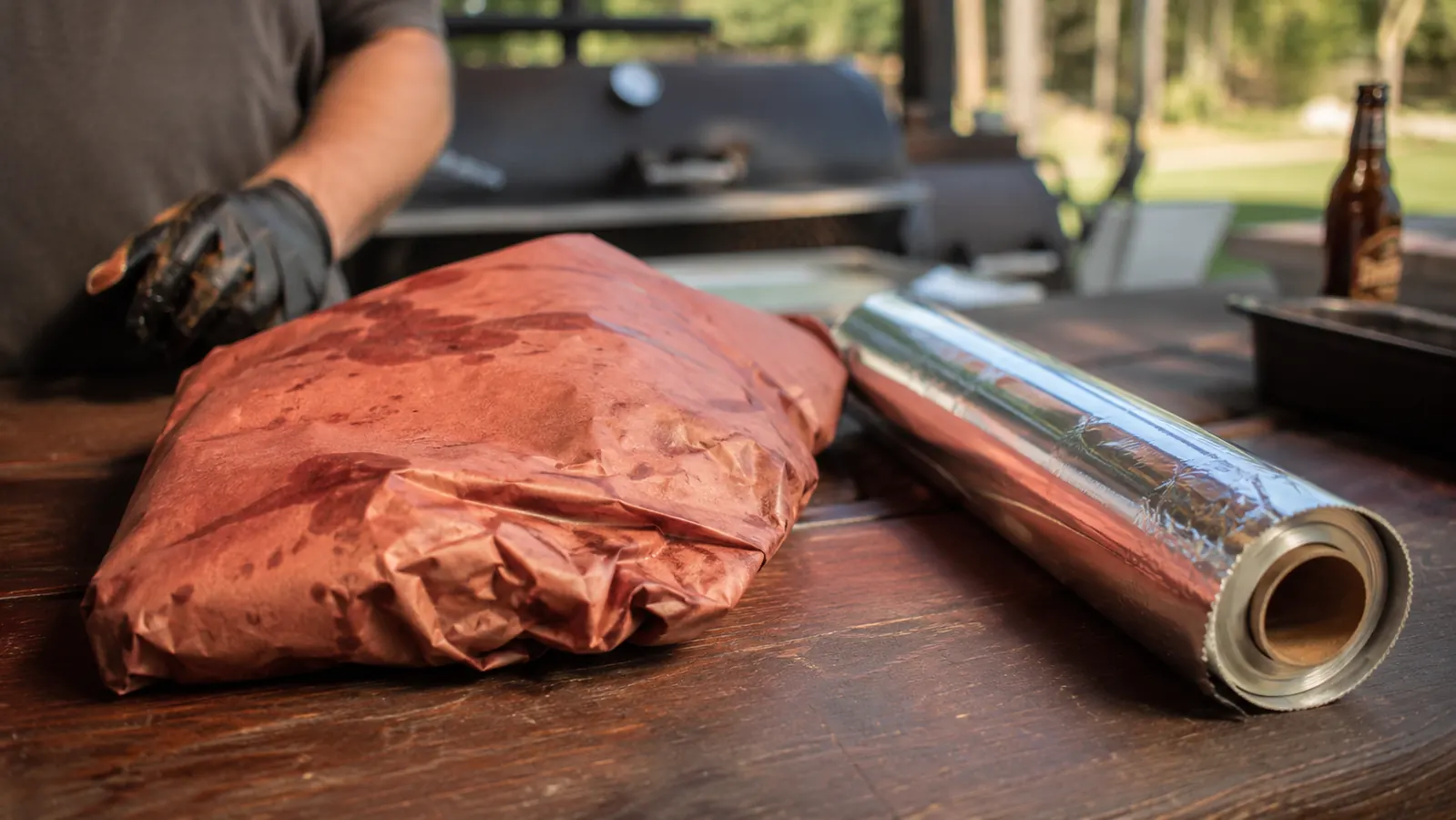
I've wrapped more briskets than I can count over twenty-five years of feeding my church family and half my wife's side of the family at every reunion, and the wrap decision used to keep me up the night before a cook. Pink butcher paper or aluminum foil, it's the argument that splits backyard cooks right down the middle at just about every cookout I've been to since my kids were still in diapers. After going back and forth more times than I'd like to admit, I settled on Bryco Goods' 18 inch by 175 foot roll of food-grade peach butcher paper for my long smokes, and I still keep a box of heavy-duty foil in the drawer for the jobs foil actually does better.
Here's the short answer if you're standing in the aisle right now trying to decide. If you're wrapping a brisket or pork shoulder past the stall and you want that bark to survive the trip home, butcher paper wins almost every time. If you're double-wrapping ribs for a fall-off-the-bone finish, lining a water pan, or need something fully sealed for a foil packet of corn on the side burner, foil is still the better tool for that job. They're not really fighting for the same title, even though everybody at the cookout talks about it like it's a boxing match.
| Pink Butcher Paper | Aluminum Foil | |
|---|---|---|
| Cost | Check today's price, one roll runs a full season for a regular weekend smoker | Check today's price, usually a bit less per roll but you burn through it faster on big wraps |
| Material | Uncoated food-grade kraft paper, breathable | Solid aluminum sheet, fully sealed |
| Best Use | Wrapping brisket or pork shoulder past the stall (the 'Texas Crutch') | Ribs, veggie packets, water pan liners, leftovers |
| Bark Texture After Wrap | Stays mostly firm, holds crust | Softens fast, can turn steamy and soggy |
| Speed Through the Stall | Moderate, breathes a little so the cook slows less | Fastest, traps steam and pushes through the stall quicker |
| Grease and Moisture Handling | Absorbs some grease, holds together fine through a 6 to 8 hour wrap | Fully waterproof, seals liquid in completely |
| Cleanup | Toss it, nothing to rinse | Toss it, but grease pools can tear thin foil |
| Reusable | Single use only | Can rinse and reuse for light, dry jobs |
| Serving Ready | Doubles as a serving surface, looks like a real barbecue joint spread | Not meant for serving, has to be peeled off first |
Where Butcher Paper Wins
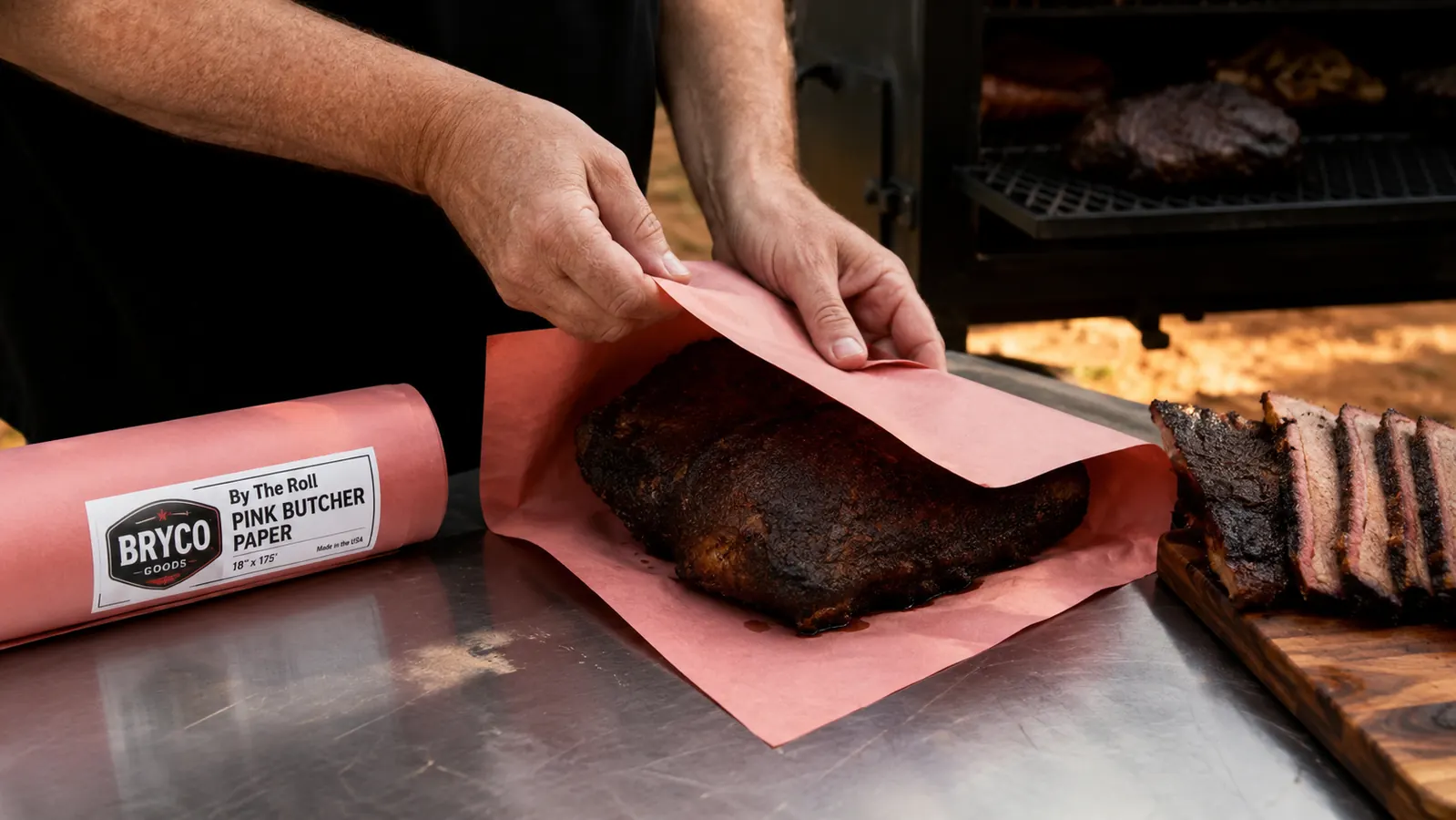
The number one reason I switched over to pink butcher paper for briskets was bark. Bark is the whole point of a 12 hour smoke, the dark, peppery crust that forms while the fat renders and the smoke does its work, and I was tired of unwrapping a beautiful brisket from foil only to find that crust had turned into a gray, mushy layer sitting in a puddle of its own juices. Bryco Goods' paper is heavy enough, and it's genuine food-grade paper the same butcher shops use, that it holds together through a long cook without falling apart in my hands the way the thin stuff from the grocery store does. The paper breathes just enough that steam escapes instead of pooling right against the meat, so the bark I built over six or seven hours of smoke stays close to how it looked coming off the smoker, just a touch softened at the edges instead of turned completely soggy.
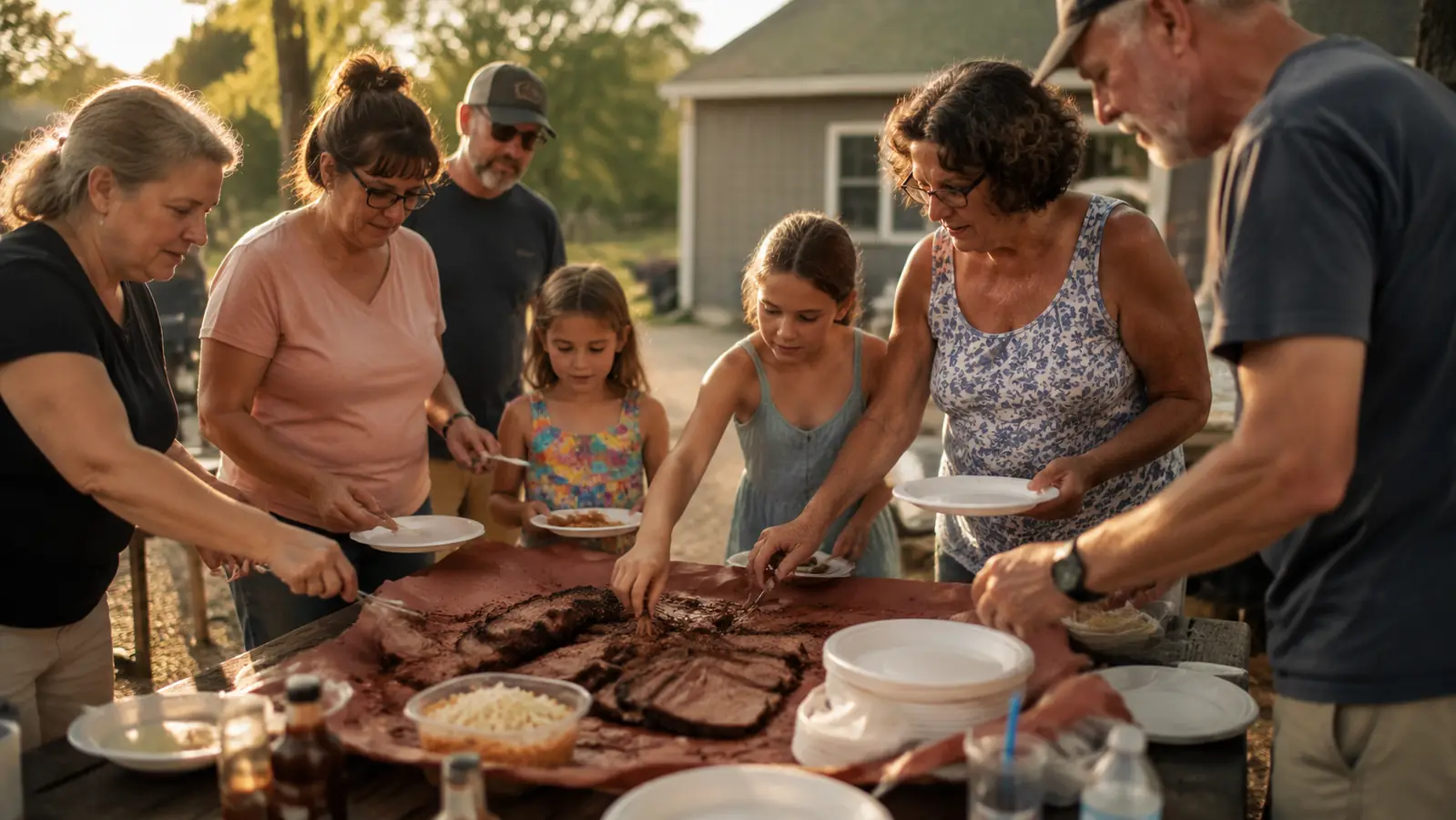
There's also no metal taste to worry about, which sounds small until you've had a piece of foil-wrapped brisket that picked up a faint tinny edge from sitting wrapped for two hours in the cooler before slicing. And honestly, I've started serving straight off the paper at reunions and church cookouts. I lay the whole slab out on a fresh sheet, slice right there in front of everybody, and it looks like something out of a real Texas barbecue joint instead of a backyard picnic table. My nephew Marcus asked me last Fourth of July if I'd started catering on the side. That's the kind of compliment butcher paper earns you that foil never will.
The paper also holds up better in a cambro or a cooler rest, which matters more than people think. A brisket needs at least an hour of rest before slicing, sometimes two or three if you're timing it around a service, and paper lets a little steam escape the whole time instead of trapping it against the bark like a sealed bag. I've pulled briskets out of a two hour foil rest with bark gone completely limp, while the same rest in paper left me a crust I could still hear crackle a bit under the knife.
Where Foil Wins
None of this means foil belongs in the trash. Foil is completely waterproof, which butcher paper is not, and that matters for plenty of jobs around the smoker and grill. When I'm doing ribs the old 3-2-1 way, I want that middle stage fully sealed so the ribs steam in their own juices and apple juice splash, and foil is the only one of the two that can hold liquid without leaking through. Same goes for lining a water pan, wrapping a foil packet of corn and potatoes on the side burner, or storing leftovers in the fridge where you need a real seal, not something breathable.
Foil also pushes a stalled brisket through faster because it traps steam completely instead of letting any of it escape, which is genuinely useful when you started your cook two hours later than you meant to and the church potluck starts at noon whether your brisket is ready or not. And it's usually a little cheaper for the casual stuff. If all you're doing is wrapping a couple ears of corn or reheating pulled pork for tomorrow's sandwiches, there's no reason to reach for the good paper. Foil handles that fine.
Foil also travels better if you're carrying a finished dish somewhere, say a pan of baked beans over to Ray's house for the game, since it seals against spills in a way paper never will. I've never once trusted a paper-wrapped side dish in the back seat on a bumpy road, but I've hauled foil-covered pans across town more times than I can count without a drop hitting the floorboard.
The Bark You Worked All Day For Deserves a Wrap That Doesn't Ruin It
If you've ever pulled a brisket out of foil and watched a beautiful crust turn to mush in front of your family, you already know why I switched. Bryco Goods' pink butcher paper is the same food-grade paper real barbecue joints use, and one 175 foot roll covers a whole season of cookouts.
Amazon Check Today's Price on Amazon →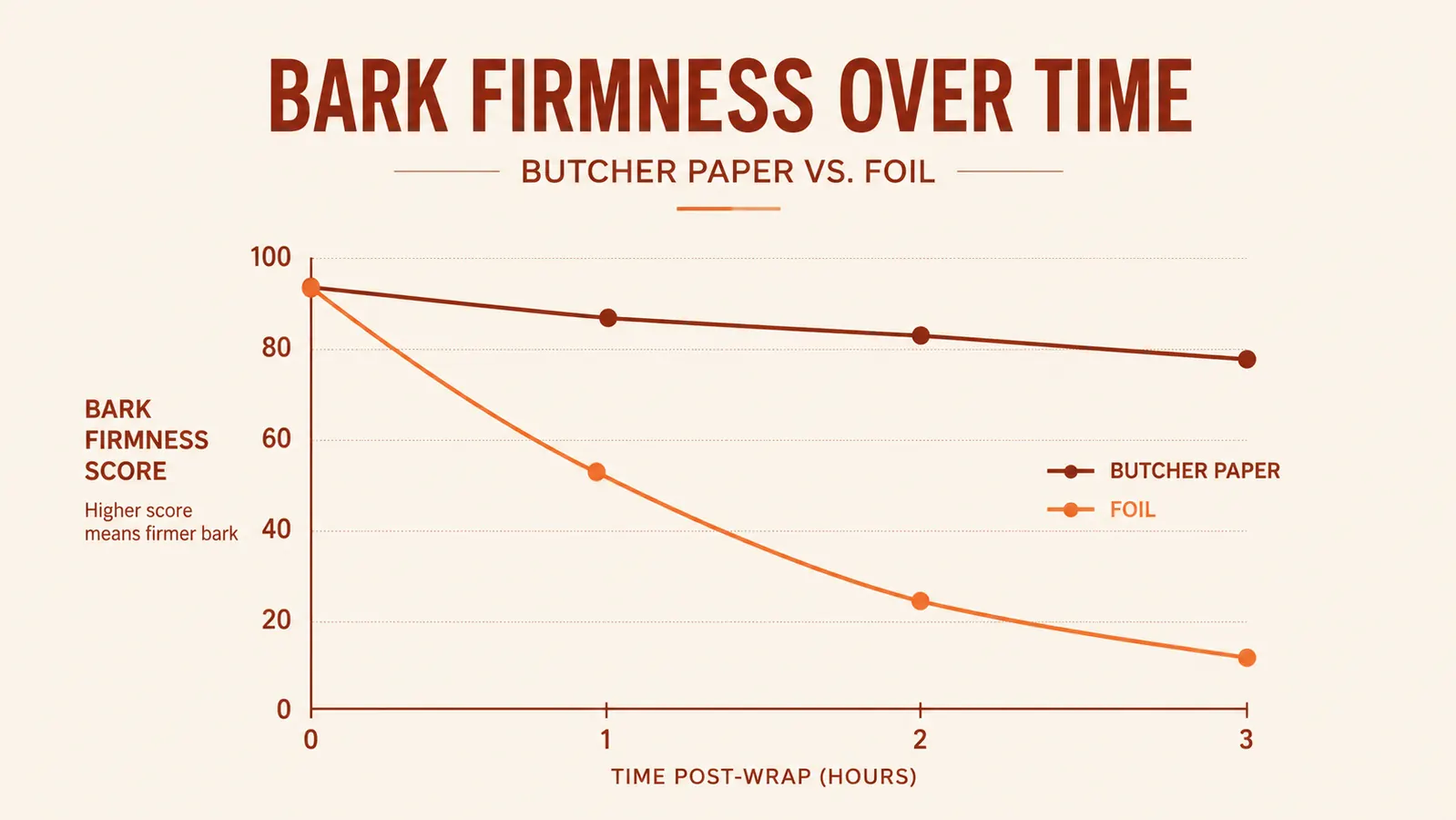
The Bark Question: Why Wrapping Style Matters at All
If you've never hit the stall, it's worth explaining why this whole debate even exists. Somewhere around 155 to 165 degrees internal, a brisket or pork shoulder will sit there for hours barely climbing in temperature while evaporative cooling from the surface fights the heat coming from your smoker. Cooks started wrapping meat at that point decades ago to push through the stall faster, and the trick got the nickname 'the Texas Crutch' because purists felt like it was cheating your way past the hard part. Wrapping in something traps heat and moisture against the meat, which speeds the cook back up, but it also changes what happens to the bark you spent all those hours building.
I learned this the hard way at Pastor Guy's retirement cookout back in 2019. I wrapped two briskets in foil at the stall, figuring foil was foil, and pulled them at 203 degrees exactly like always. When I unwrapped them, the bark had gone soft and pale in spots, almost like the crust had melted back into the meat. Half the table still loved it, brisket is brisket, but I knew it wasn't my best work. The next big cook I tried paper instead, and the difference in that first bite was obvious enough that my wife Sherry asked what I'd changed before I even told her.
Common Mistakes I See With Both
The biggest mistake I see new cooks make with butcher paper is wrapping too loose. Paper only does its job when it's snug against the meat, so wrap it like you're swaddling a baby, tight folds, no air pockets, and tuck the ends underneath so it holds on its own without tape or string. A loose wrap lets extra steam escape and can actually slow your cook down more than you want, right when you're trying to push past the stall.
With foil, the mistake I see most is using a single thin layer on a big brisket and having it tear halfway through the cook, usually right when a bone pokes through or you shift it on the grate. Double up on foil for anything over eight or nine pounds, and always wrap with the shiny side in if you're chasing extra heat retention on a cold day. Both mistakes are easy fixes, but they're the difference between a wrap that works for you and one that fights you the whole cook.
What This Costs You Over a Grilling Season
Neither of these is going to break a grilling budget, but it's worth doing the math since people ask. One roll of Bryco Goods' butcher paper runs you enough length, 175 feet, to wrap somewhere around 15 to 20 full briskets depending on how generous you are with overlap, which for most backyard cooks is an entire season of weekend smokes from spring through football season. A comparable roll of heavy-duty foil covers fewer full brisket wraps because you typically need a double layer to get anywhere near the same seal, so you'll burn through a roll faster if you're using it for every big cook.
Where foil pulls ahead on cost is in all the small jobs, lining pans, wrapping vegetables, covering a half pan of leftovers, where you're not trying to preserve bark at all. I keep both on hand for that reason. The paper handles the centerpiece of the meal, the foil handles everything else around it, and between the two I'm not spending more in a season than I used to spend guessing wrong with foil alone and serving a soggier brisket for the trouble.
Who Should Buy Which
If you smoke brisket, pork shoulder, or anything else that goes low and slow past the stall on a regular basis, get the butcher paper. It's not close for that job, and the difference shows up in the bark every single time. If your grilling is mostly quick sears, weeknight ribs, or side dishes wrapped up and thrown on the grate, plain foil will serve you fine and there's no need to spend extra.
My honest advice after all these years is to keep both in the kitchen drawer. I use my roll of Bryco Goods paper for every brisket and pork shoulder that goes on the smoker, and I still reach for the foil box for ribs, sides, and anything that needs a real waterproof seal. Neither one replaces the other, they just cover different parts of the same cookout, and once you've got both on hand you stop thinking about it and just grab whichever one the job actually calls for.
Stop Losing Bark to a Wrap That Was Never Built for It
Twenty-five years of cookouts taught me the wrap matters as much as the rub. If your next brisket is worth the twelve hours it takes to get there, give it a wrap that actually protects the bark you built. Bryco Goods' peach butcher paper is what I reach for every single time now.
Amazon Check Today's Price on Amazon →