
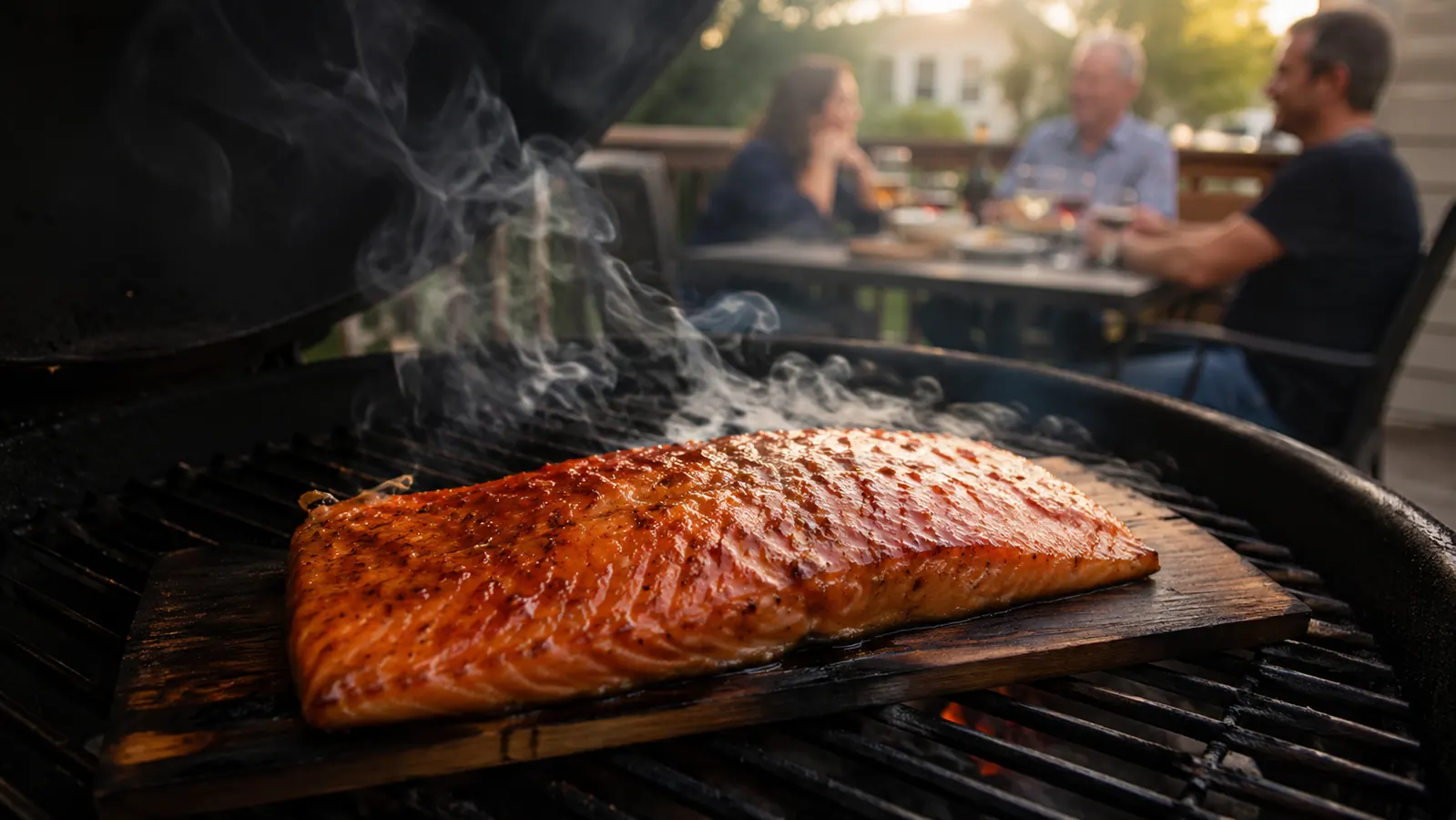
For years my salmon came off the grill one of two ways. Either it stuck to the grates so bad that half the fillet stayed behind when I tried to flip it, or I overcooked it trying to avoid the sticking and ended up with something dry and chalky that nobody at the table finished. I love salmon, but I'd about given up on grilling it at home and just baked it in the oven instead, which felt like cheating on cookout day.
My brother-in-law Ray talked me into trying a cedar plank at a family reunion up in Tennessee three summers back, and it was the first time I'd ever pulled salmon off my own grill that tasted like something a restaurant would serve. No sticking, no dry edges, and this smoky sweetness from the wood that you just can't get any other way. I picked up a twelve-pack of USA-made Grill Gourmet cedar grilling planks the week I got home, and it's become my go-to method for salmon every single time since, church potlucks included.
Stop losing half your salmon to the grates
A cedar plank keeps the fillet off direct flame entirely, so there's nothing to stick to and nothing to flip. The wood smokes underneath while the salmon cooks gently on top, which is the whole trick to keeping it moist. A twelve-pack of USA-made planks gives you plenty of room to mess up your first couple and still have salmon night whenever you want it.
Amazon Check Today's Price on Amazon →Step 1: Pick a Fillet With the Skin Still On
Buy your salmon with the skin on, even if you don't plan on eating it. The skin acts like a second layer of protection between the fish and the heat, and it helps the fillet hold together while it cooks on the plank instead of flaking apart. I usually go with a center-cut fillet from a whole side, about an inch thick through the middle, which cooks more evenly than the thin tail end.
Let the salmon sit out on the counter for about fifteen minutes before it goes anywhere near the grill. Cold fish straight from the fridge cooks unevenly, seared on the outside before the middle catches up, and that mismatch is a big part of why so many home cooks end up with dry salmon. Pat it dry with a paper towel too. A wet surface won't take a glaze or seasoning nearly as well.
For a reunion crowd, figure roughly six ounces of fillet per adult, a little less for kids. A full side of salmon usually runs two and a half to three pounds and covers six to eight people comfortably. I'd rather grill two Grill Gourmet planks with room to spare than crowd one oversized fillet that cooks unevenly edge to middle.
Step 2: Soak the Plank Longer Than You Think You Need To
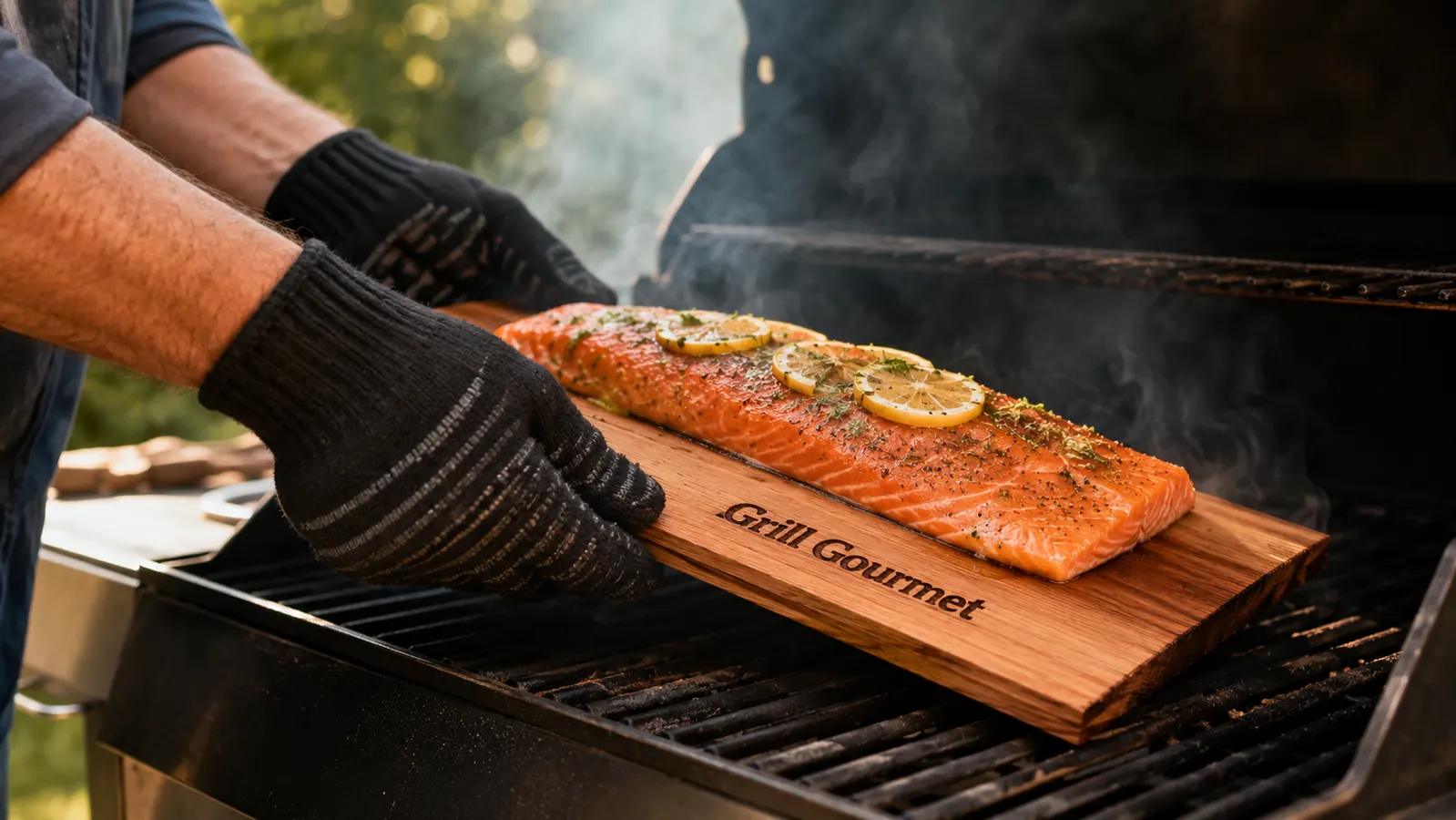
This is the step people rush, and it's the one that matters most. Submerge the Grill Gourmet cedar plank completely in a pan of water, weighted down with something heavy like a full can, since the wood floats and won't soak evenly if half of it keeps bobbing above the surface. I use a nine-by-thirteen baking dish and just set a couple soup cans on top of the plank.
One hour is the bare minimum. I soak mine for at least two hours, and if I know I'm cooking that evening, I'll get the plank in water first thing in the morning and let it sit in the fridge all day. A properly soaked plank smokes slow and steady instead of catching fire the second it hits the grates. A plank that's only soaked for twenty minutes will dry out fast and can flare up on you halfway through cooking, and that's how you end up with a scorched fillet and a genuine grease fire scare.
A quick way to tell if it's ready is to watch how it sits in the water. A dry plank floats high and stubborn. Once it's properly soaked through it rides noticeably lower, and you'll feel it's heavier when you lift it out. Some folks add apple juice or a splash of white wine to the soaking water for a little extra flavor in the smoke. I've done it and it's a nice touch, but plain water works just fine if you're not fussing with it. Don't skip the soak to save time though, that's the one shortcut that never pays off.
Step 3: Season Simple and Preheat the Plank
Keep the seasoning simple so the cedar smoke can actually come through. My standard is olive oil rubbed into the flesh side, a good coat of coarse salt and cracked pepper, a squeeze of lemon, and sometimes a thin layer of brown sugar and dijon mustard if I'm feeding a crowd that likes it a little sweet. Anything heavier than that and you're just masking the whole reason you bought a cedar plank in the first place.
If you want to switch it up, a maple and dijon glaze brushed on halfway through cooking works well, and so does a light teriyaki brush for the grandkids who like something sweeter. Just brush glazes on partway through rather than at the start, since sugar-heavy sauces can burn before the fish is done if they're on there the whole cook.
Before the salmon goes on, set the soaked plank directly on the grill grates by itself for three or four minutes with the lid closed, medium-high heat, somewhere around 400 to 450 degrees. You'll hear it start to crackle and pop a little and see the underside darken and char. That's exactly what you want. It means the wood is hot enough to start smoking on its own before the fish ever touches it.
Step 4: Lay the Salmon Skin-Down and Close the Lid
Once the plank has charred a bit, lay your seasoned fillet right on top, skin side down, and close the grill lid. From here it's a waiting game more than an active cooking process, which is honestly my favorite part of this whole method. There's no flipping, no babysitting a spatula, just checking every few minutes.
Keep a spray bottle of water within arm's reach the first couple times you do this. If the plank edges catch a real flame instead of just smoking, a light spritz knocks it back down without opening the lid too long and losing your heat. Most of the time you won't need it if you soaked the plank properly, but it's good insurance, especially with a full-size grill where flare-ups from dripping fat can happen near the edges.
If your grill has more than one burner, it helps to run the burners under the plank a touch lower than the others, so you get steady heat around the plank rather than a direct blast straight up through the wood. A one-inch center-cut fillet usually takes twelve to eighteen minutes total with the lid closed, depending on your grill and how hot it's running. Resist opening the lid every couple minutes to peek. Every time you lift it you lose heat and add cooking time, and the smoke that's building up inside is doing half the work.
Step 5: Pull It Early and Let It Finish Resting
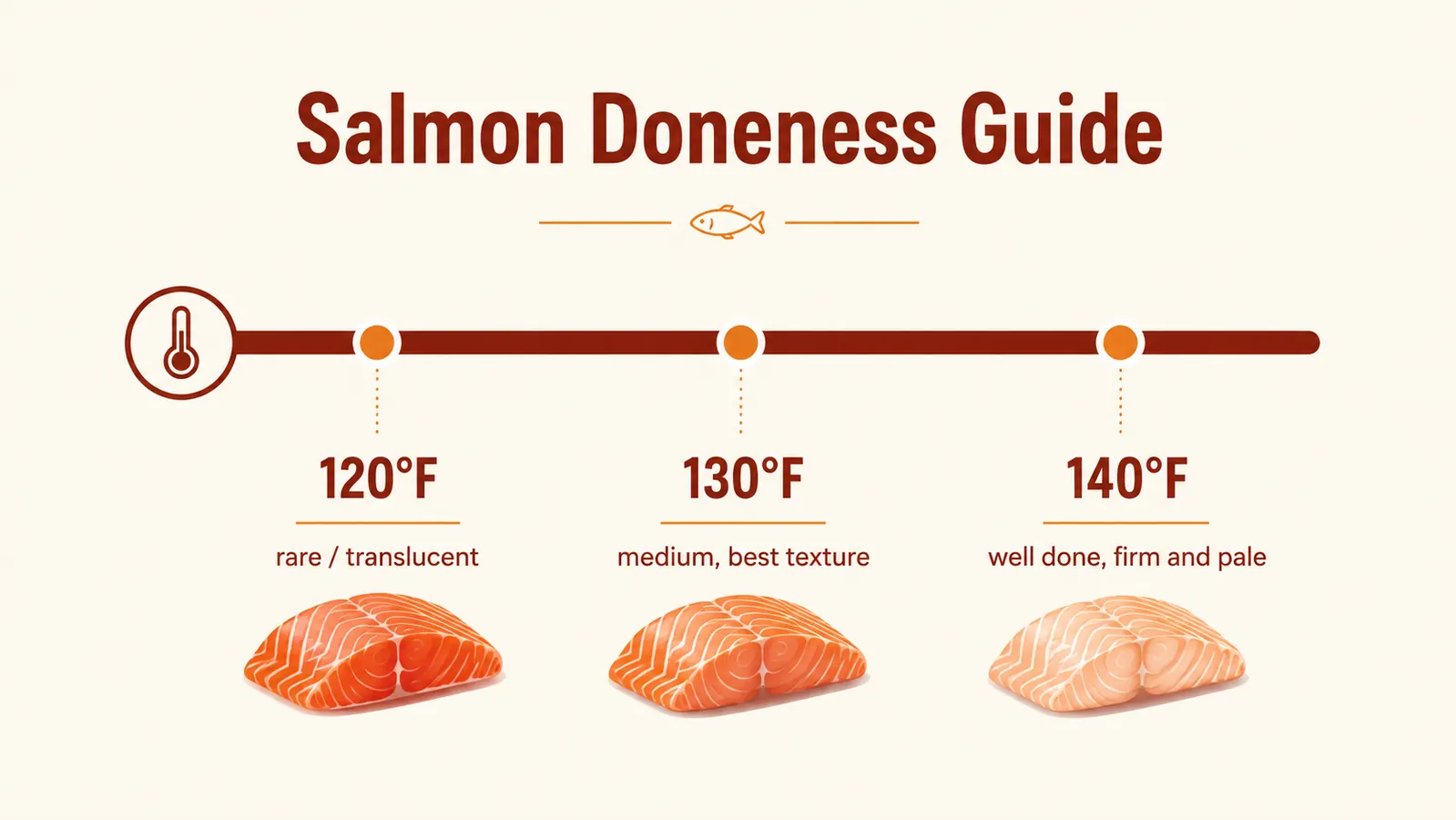
Salmon keeps cooking for a few minutes after it leaves the heat, so pull it off the grill when the thickest part reads about 125 to 130 degrees on an instant-read thermometer. It'll climb to around 135 to 140 while it rests, which lands you right in that moist, medium-cooked range where the fillet flakes easily but isn't the least bit dry or chalky.
If you or your family prefer salmon cooked all the way through with no pink at all, aim to pull it around 135 and let it rest up to 145. Just know that every ten extra degrees past that point is where the moisture starts disappearing. Let it sit on the plank for three to five minutes before serving, tented loosely with foil. The plank itself stays hot enough to keep the fish warm without any extra heat, which is handy if you're still finishing up sides on the grill.
Leftovers keep well in the fridge for a couple days if you've got any, which isn't often in my house. Reheat gently, covered, in a low oven rather than the microwave, or just flake it cold over a salad the next day. It holds up better than most grilled fish does after a night in the fridge.
What Else Helps
A thin metal fish spatula makes serving a lot cleaner than trying to lift the fillet with tongs, since you can slide it right between the skin and the flesh and leave the skin stuck to the plank. If you're feeding a bigger group, grill two Grill Gourmet planks side by side rather than cramming one oversized fillet onto a single board, you'll get more even cooking and a better smoke ring on both. And don't try to reuse a heavily charred plank for a second cook. If the underside is mostly blackened rather than just darkened, it's done its job and it's time for a fresh one from the pack.
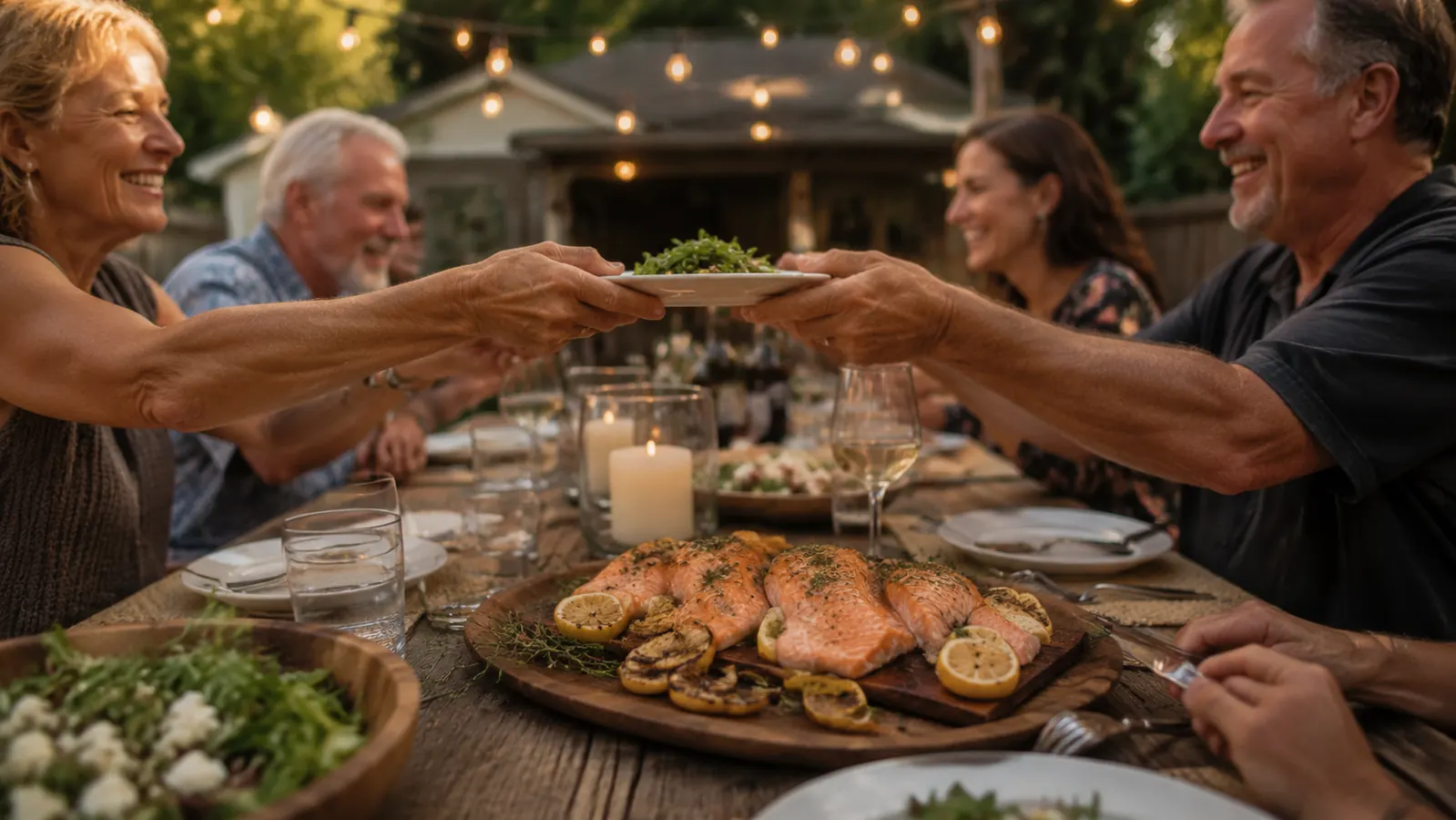
For potluck sides, I keep it simple to match the salmon rather than compete with it, a lemon rice pilaf, a green salad with a light vinaigrette, or grilled asparagus done on the same grill while the plank is going. Heavy, creamy sides tend to fight with the smoky flavor instead of complementing it.
The plank isn't decoration. It's what keeps the salmon off direct flame long enough to smoke gently instead of scorch, and that's the whole difference between dry fish and dinner people ask you to make again.
Ready for salmon that doesn't stick or dry out
These USA-made cedar planks come twelve to a pack, plenty to get comfortable with the soak time and heat before you're serving a full table. It's become the easiest way I know to turn out restaurant-style grilled salmon at home, potluck after potluck.
Amazon Check Today's Price on Amazon →